
Dogs can’t talk, but they’re constantly communicating. Every tail wag, ear position, and posture shift is telling you something — you just have to know what to look for.
Understanding your dog’s body language isn’t just a fun party trick. It helps you spot stress before it becomes a bite, recognize when your dog is truly happy (not just wagging out of habit), and build the kind of trust that makes training actually work.
Here’s a simple, practical guide to what your dog is really saying.
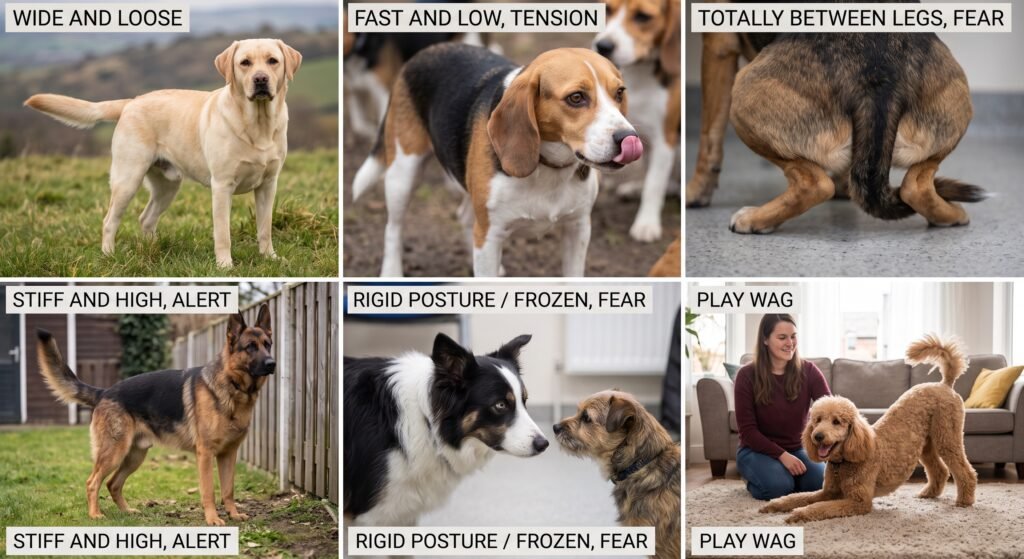
The Tail: More Complicated Than “Wagging = Happy”
A wagging tail doesn’t always mean a happy dog. What matters is the speed, height, and stiffness of the wag.
- Loose, wide wags at mid-height — relaxed and friendly
- Fast, low wags with a tucked tail — anxious or submissive
- Stiff, high wag, barely moving — alert, possibly on edge; approach with caution
- Tail tucked completely between the legs — fear
If you only remember one thing: a stiff tail is a warning sign, no matter how fast it’s moving.
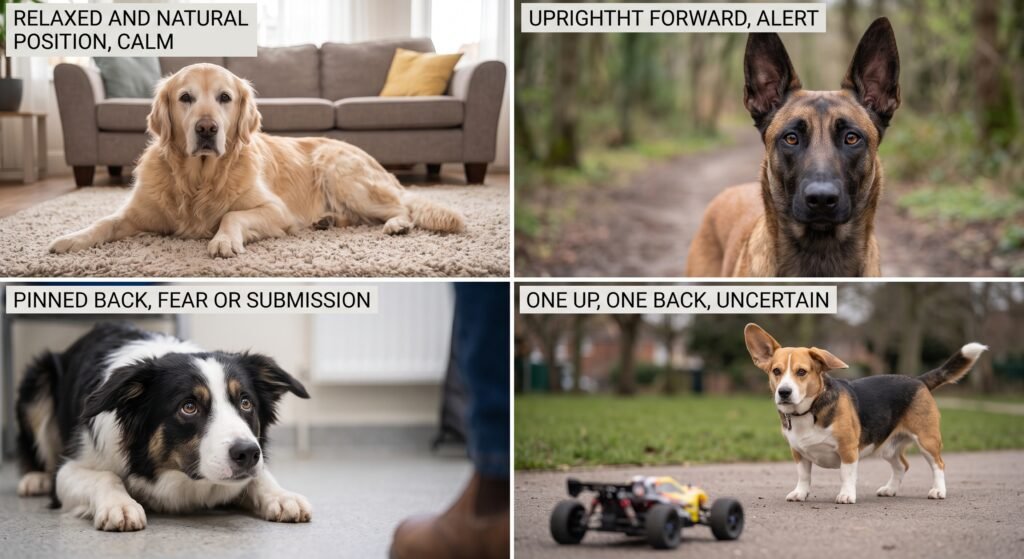
Ears: The Early Warning System
Ear position shifts fast, which makes it one of the best signals for catching a mood change before it escalates.
- Relaxed, natural position — calm
- Perked forward — alert, focused on something
- Pinned back flat — fear or submission
- One ear up, one back — uncertain, processing something new
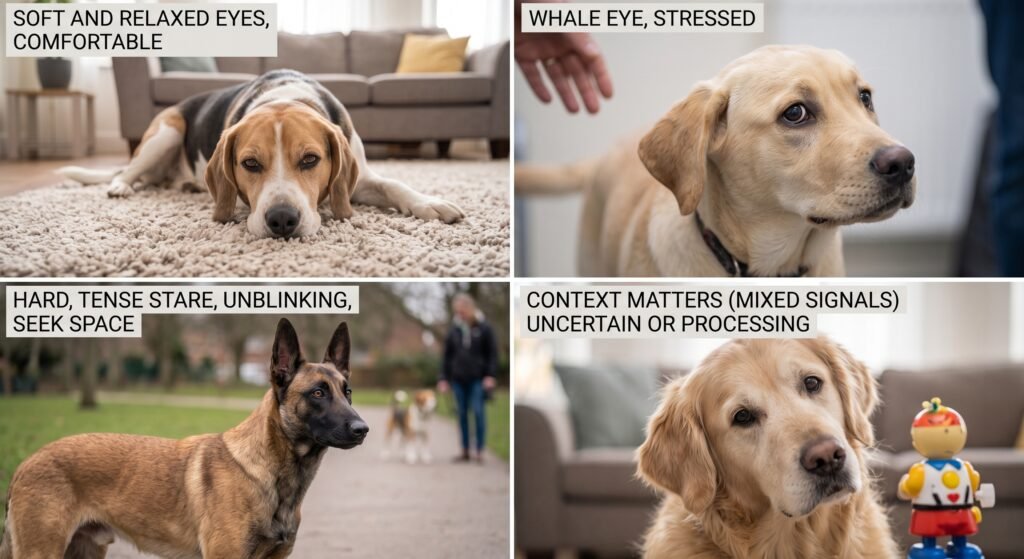
Eyes: Soft vs. Hard
- Soft, relaxed eyes with normal blinking — comfortable
- Whale eye (whites of the eyes visible in a crescent shape) — stressed or uncomfortable, often seen right before a warning growl or snap
- Hard, unblinking stare — this is a serious signal, especially if paired with a stiff body. Give the dog space immediately.
Body Posture: The Overall Picture
Look at the whole body, not just one part.
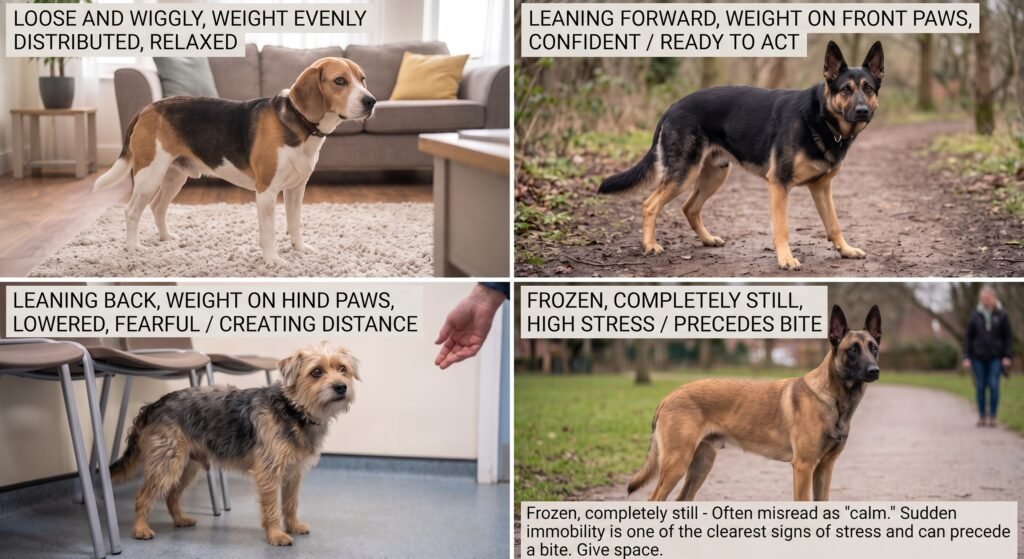
- Loose, wiggly body, weight evenly distributed — relaxed
- Leaning forward, weight on front paws — confident, possibly about to act (play or otherwise)
- Leaning back, weight on back paws, body lowered — fearful or trying to create distance
- Frozen, completely still — this is often misread as “calm.” A sudden freeze is actually one of the clearest signs of stress and can precede a bite.
Common Signals People Misread
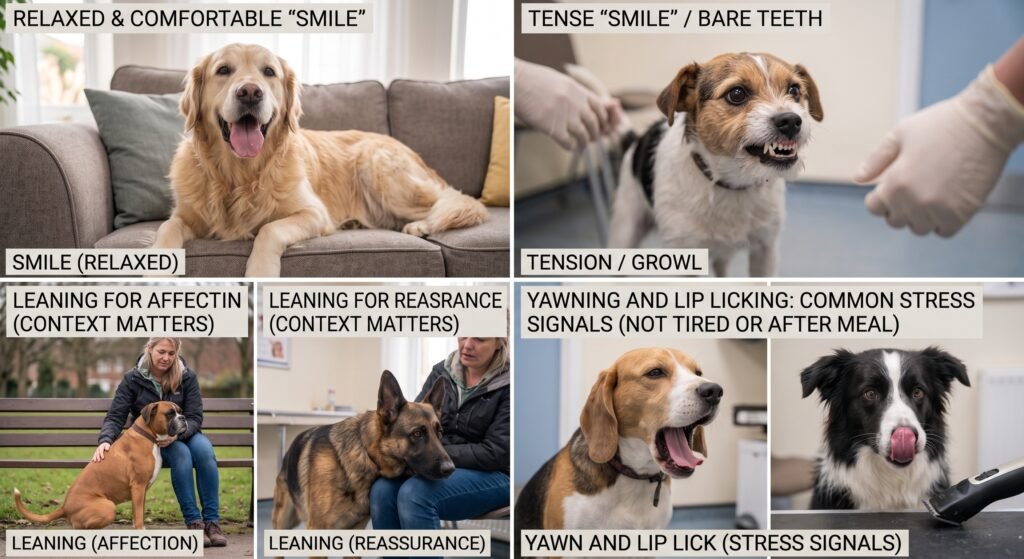
“He’s smiling!” That relaxed, open-mouth look with the tongue out usually does mean a happy, comfortable dog. But a tightly closed mouth, or lips pulled back to show teeth, is a very different signal — that’s tension, not a smile.
“She’s just being affectionate.” Leaning against you can mean affection, but it can also mean anxiety — dogs sometimes lean into their person for reassurance when something in the environment is stressing them out. Context matters.
Yawning and lip licking Outside of actual tiredness or a meal, yawning and lip licking are two of the most common stress signals in dogs. If your dog does this during a vet visit, a nail trim, or a tense interaction with another dog, they’re telling you they’re uncomfortable.
Putting It Together: A Real-Life Example
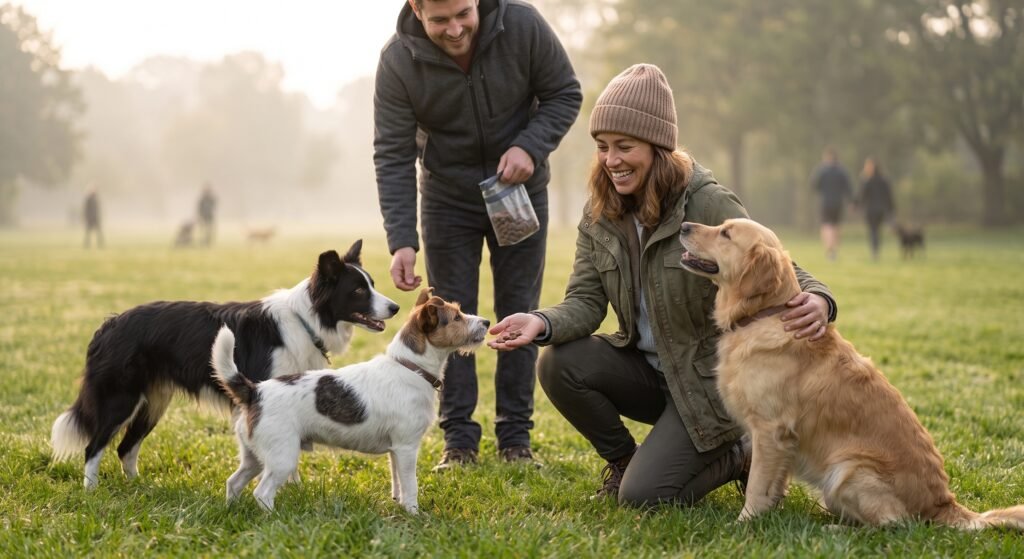
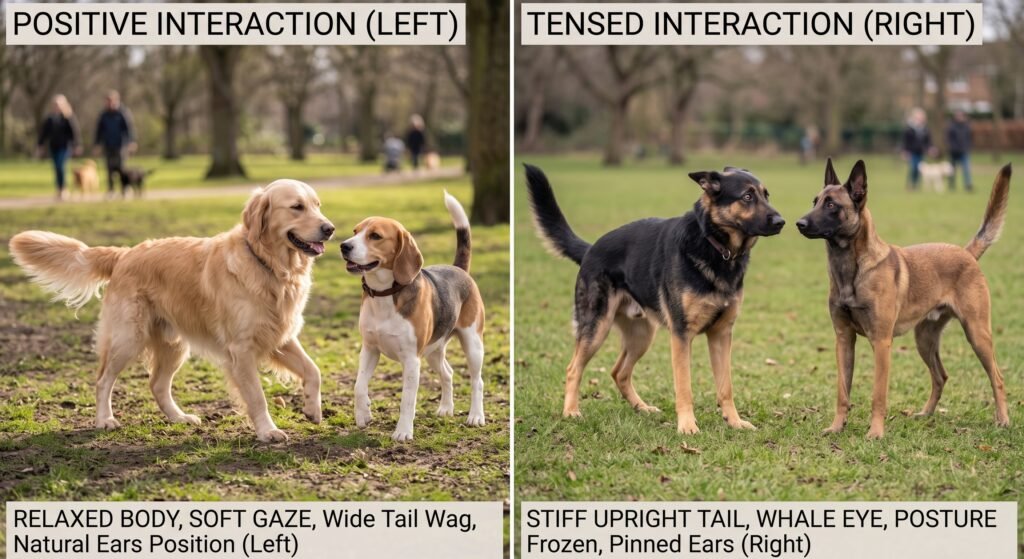
Imagine your dog is meeting a new dog at the park. If you see a loose body, soft eyes, a relaxed wide tail wag, and ears in a natural position — things are going well.
If instead you notice a stiff tail held high, ears pinned or forward, whale eye, and a frozen posture — that’s your cue to calmly redirect before things escalate, not after.
Why This Matters for Training
Dogs that feel understood are easier to train, not because they suddenly become obedient, but because you stop pushing them into situations that overwhelm them before they’re ready. Reading these signals early means you can adjust — give space, slow down, or reward calm behavior — instead of reacting after a growl or a bite already happened.
The Bottom Line
Your dog is talking to you all the time. Learning to read tail position, ears, eyes, and overall posture together — not in isolation — gives you a much clearer picture of what they’re actually feeling, moment to moment.
The more fluent you become in this silent language, the stronger your relationship with your dog will be.
This post is for educational purposes and isn’t a substitute for professional guidance. If your dog is showing frequent signs of fear, anxiety, or aggression, consider consulting a certified dog trainer or veterinary behaviorist.