
If you’ve just brought home a puppy, you’re in the middle of the most important window of their entire life — and it closes fast.
Between roughly 3 and 16 weeks of age, puppies go through what behaviorists call the “critical socialization period.” What happens (or doesn’t happen) during these few weeks shapes how confident, friendly, and resilient your dog will be for the rest of their life.
Here’s what that actually means, and how to make the most of it.
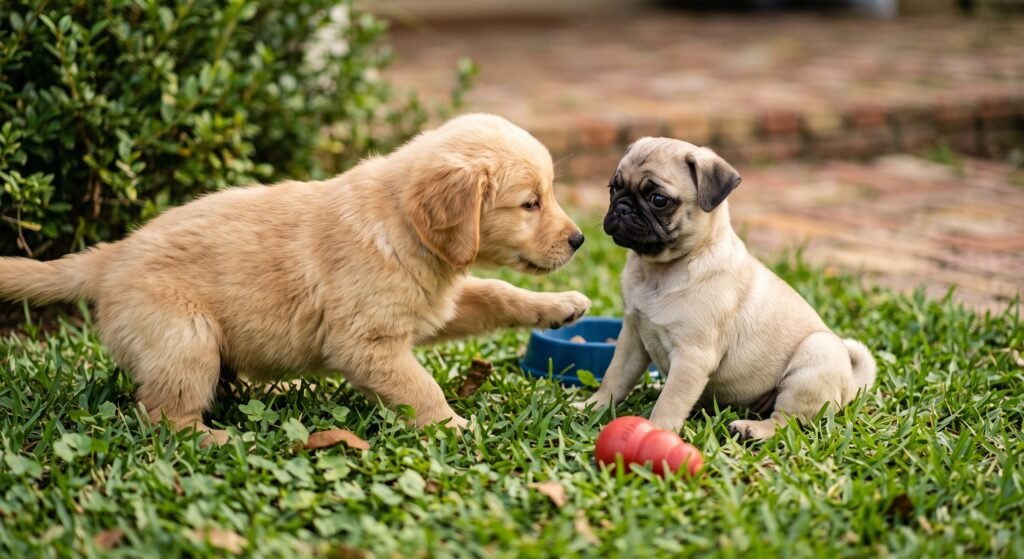
Why This Window Matters So Much
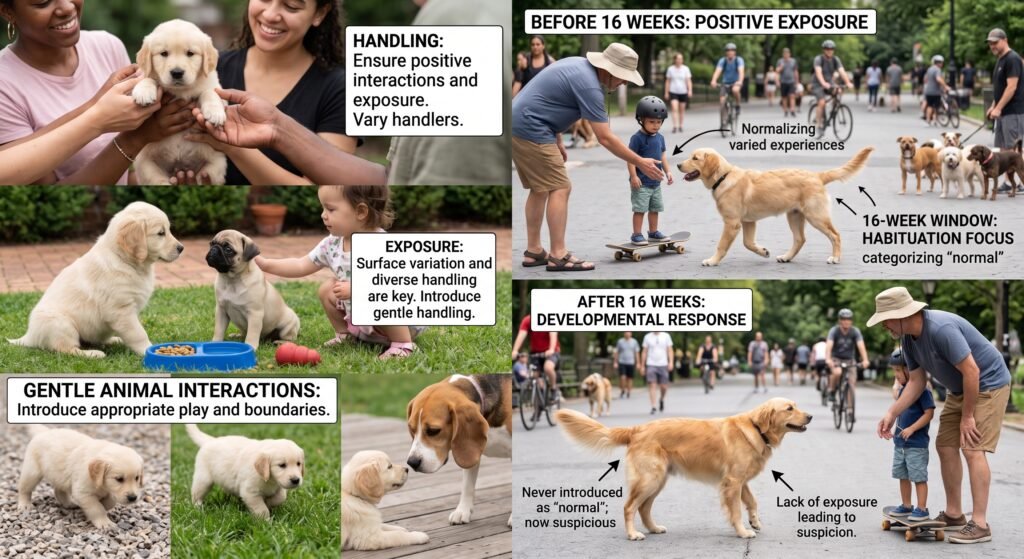
Puppies are biologically wired to be more open to new experiences during this period than at any other point in their lives. Their brains are primed to categorize what’s “normal” and safe in the world.
After around 16 weeks, that window starts closing. Dogs don’t stop learning after that, but new things become inherently more suspicious rather than automatically accepted. A dog who never met a man in a hat, a skateboard, or a small child during this window may react with fear or aggression later — not because something bad happened, but because it was simply never introduced as “normal.”
This is why so many adult dog behavior problems — fear of strangers, reactivity to other dogs, noise phobias — trace back to a lack of exposure during these early weeks, not to any single bad experience.
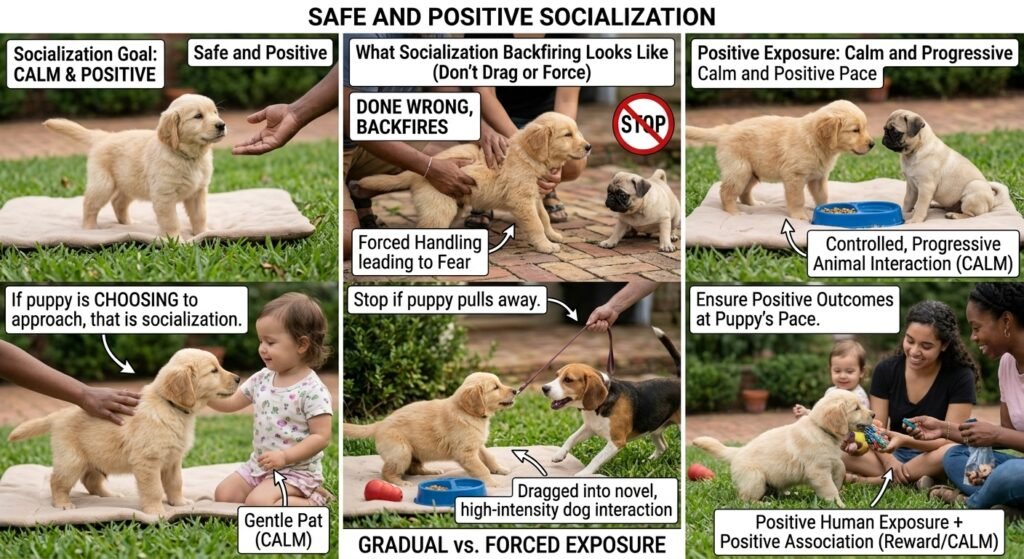
The Two Words That Matter Most: Safe and Positive
Socialization isn’t just “expose your puppy to everything.” Done wrong, it can backfire completely.
The goal is exposure that is calm, positive, and at the puppy’s own pace — not overwhelming, forced, or frightening. A puppy that gets cornered by an overly excited dog at the park, or is forced to be held by a stranger while visibly trying to pull away, isn’t being socialized. They’re being taught that new things are scary.
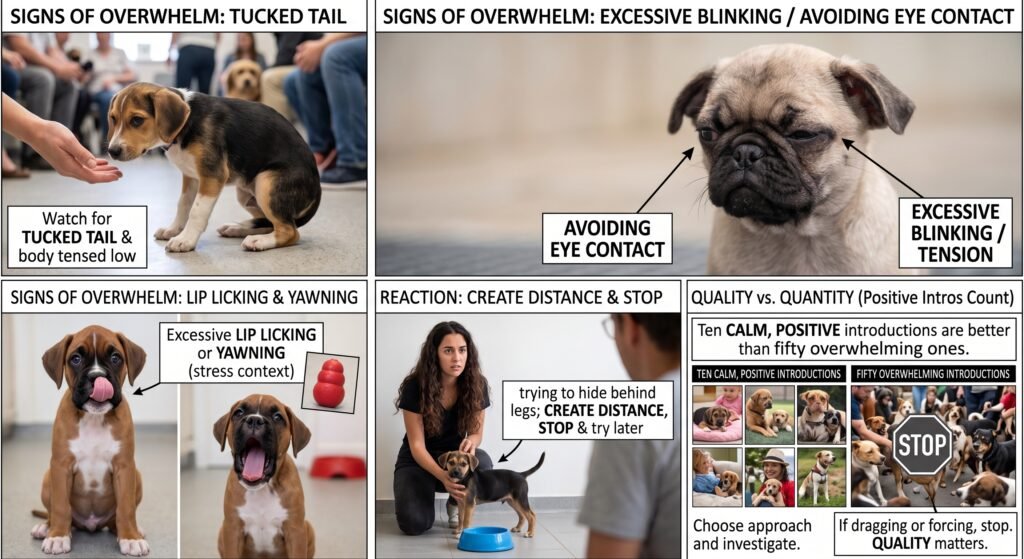
A good rule: if your puppy is choosing to approach and investigate, that’s socialization. If you’re dragging or forcing them into something, stop and try again more gradually.
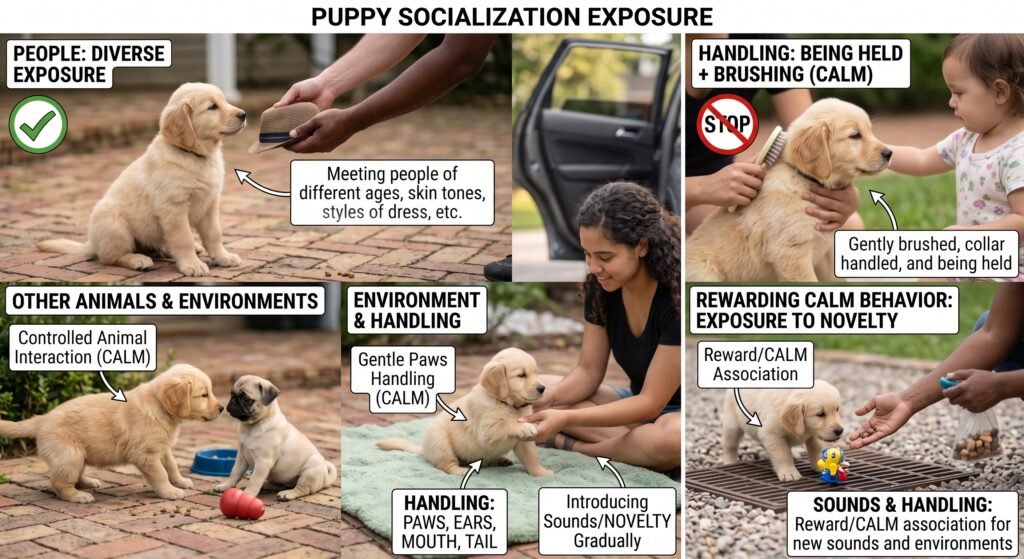
What to Expose Your Puppy To
Think across these categories, not just “meeting other dogs”:
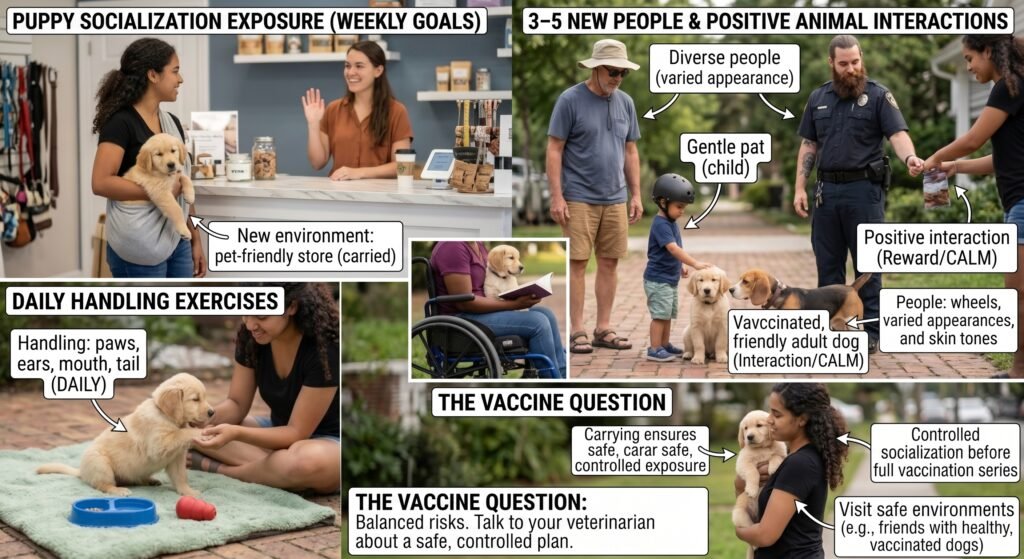
- People Different ages, genders, heights, skin tones, and styles of dress — people wearing hats, sunglasses, uniforms, beards. People using wheelchairs or walkers. People of different ethnicities and voices.
- Other animals Vaccinated, friendly adult dogs (not just puppies). Cats, if possible. Livestock or other animals if you live somewhere they’ll encounter them regularly.
- Environments Car rides. Different surfaces (grass, gravel, tile, metal grates, stairs). Busy sidewalks. Quiet rooms. Vet clinic waiting rooms (even just for a treat, not always an exam).
- Sounds Vacuum cleaners, thunder recordings, fireworks recordings (played quietly at first), doorbells, traffic, children playing.
- Handling Gently touching paws, ears, mouth, and tail so future nail trims, ear cleaning, and vet exams aren’t a fight. Being held, brushed, and having their collar handled.
A Simple Weekly Approach
You don’t need a rigid checklist, but aiming for a mix of these each week through the socialization window helps:
- 2–3 new environments (a friend’s house, a pet-friendly store, a park bench)
- 3–5 new people, varied in appearance
- 1–2 calm interactions with a vaccinated, friendly adult dog
- Daily handling exercises (a few minutes of touching paws, ears, mouth)
- Exposure to at least one new sound or surface
The Vaccine Question
A common concern: “Isn’t it dangerous to take an unvaccinated puppy out in public?”
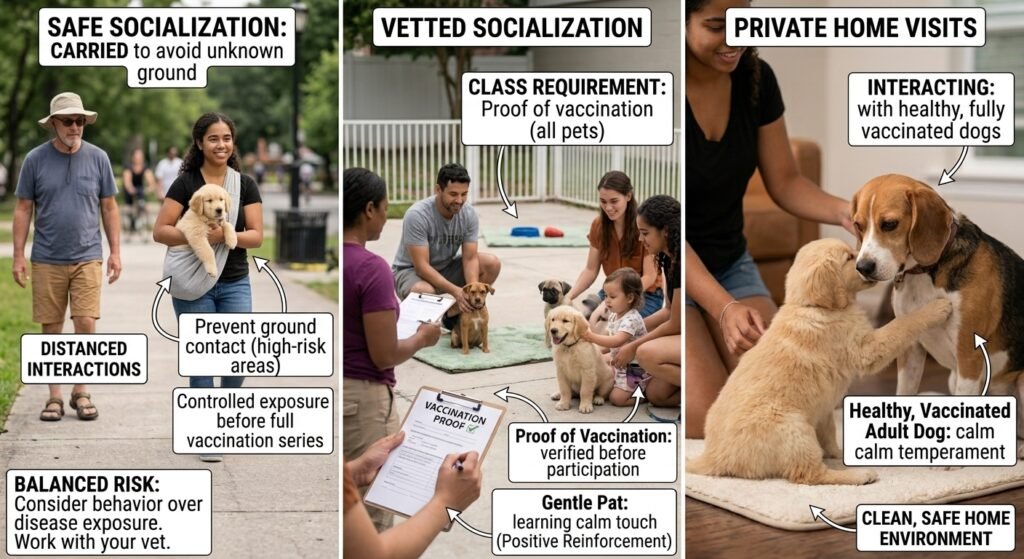
This is a real balance to strike. Many veterinary behaviorists now recommend controlled socialization even before the vaccine series is complete — carrying your puppy (not letting them walk on ground where unknown dogs have been), attending puppy classes that require proof of vaccination for all participants, and visiting the homes of friends with healthy, vaccinated dogs.
The risk of a serious behavioral problem from under-socialization is, for many puppies, a bigger long-term risk than the relatively low risk of disease exposure when precautions are taken. Talk to your vet about a socialization plan that fits your specific puppy and location.
Signs Your Puppy Is Overwhelmed, Not Socializing
Watch for tucked tail, flattened ears, trying to hide behind your legs, excessive lip licking or yawning, or freezing in place. If you see these signs, it’s time to create distance and try again later, more gradually — not push through.
Quality matters far more than quantity. Ten calm, positive introductions will do more good than fifty overwhelming ones.
What If You Missed the Window?
If your puppy is already past 16 weeks, or you adopted an older puppy with a limited history, don’t panic. The window doesn’t slam shut like a door — it gradually narrows. Dogs can still be socialized later, it typically just takes more patience, a slower pace, and sometimes professional guidance from a certified trainer or veterinary behaviorist.
The Bottom Line
Those first few months are a narrow but powerful window to shape a confident, adaptable dog. A little intentional effort now — calm, positive, varied exposure — pays off for the next 10+ years of your life together.
This post is for educational purposes and isn’t a substitute for professional guidance. If your puppy shows signs of significant fear or you’re unsure how to proceed safely, consult a certified dog trainer, veterinary behaviorist, or your veterinarian.